You’re staring at a glowing Rift Anchor wondering if you’re ready for your first Nightmare. The answer? Probably not but that’s exactly when you should go in.
- Nightmares are instanced boss fights that drop rare loot and Stardust Source currency
- Enter through Phase 1 or Phase 2 portals at Rift Anchors (higher phase = better rewards)
- Bring water, food, ammo, and healing items, you can’t leave mid-fight without losing progress
- Focus DPS on weak points during vulnerability windows and dodge the telegraphed attacks
What Is Once Human and Why Should You Care
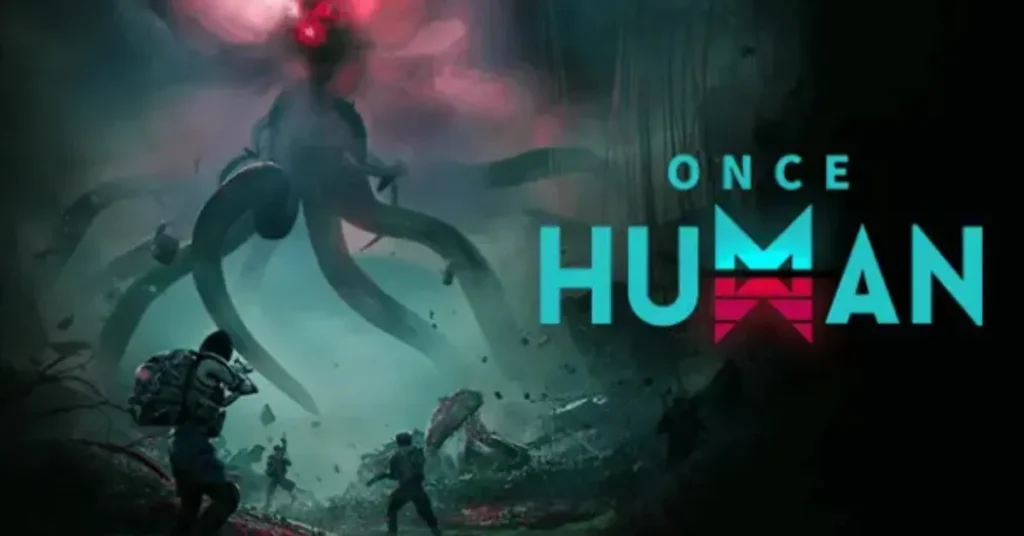
Once Human is a free-to-play open-world survival MMO developed by Starry Studio and published by NetEase. You wake up in a post-apocalyptic version of Earth where an alien compound called Stardust has mutated most living things into creatures called Deviants. As a Meta-Human who can actually withstand the contamination, you’re one of the few survivors capable of fighting back, building outposts, and figuring out what the Stardust actually wants.
On paper it sounds like thirty other games you’ve already tried. What makes Once Human different is that it layers all of its systems together in a way that actually makes sense. The base building matters for progression. The exploration feeds your crafting. The crafting unlocks your combat potential. And the endgame, specifically learning how to clear a nightmare in Once Human’s Endless Dream scenario, gives you a genuinely compelling challenge to work toward. Most survival games fall apart at that last part. Once Human doesn’t.
It launched on PC via Steam in July 2024, and has since expanded to mobile. Steam reviews sit at Mostly Positive with over 79,000 user reviews, which for a free game in a saturated genre is a real statement. Most players I know who tried it came in skeptical and stayed for weeks.
Shooter Combat
100+ gun blueprints across 7 categories with deep modding. Swap loadouts for different content types.
Deep Base Building
Territory-based construction with flying camera mode, prefab duplication, and quality-of-life tools that rival dedicated builders.
Open World MMO
Massive shared maps with PvE and PvP server options. World bosses, biomes, and loot scattered everywhere.
Deviant System
Collect creature companions that help you mine, clean, fight, and more. Some have bizarre preferences. One likes music.
The World Is Weird and That’s a Feature
Once Human commits hard to its Lovecraftian cosmic horror aesthetic and it pays off. You’ll stumble across a walking city bus with dozens of leg-like arms that strolls up the highway offering free gear once a day. There are lamp-headed monsters. Briefcase-headed humanoids. Environments shift between pastoral decay and genuinely unsettling alien geometry. I’ve noticed that the most memorable moments in this game come from exploration, not combat, just stumbling across something you don’t have words for.
The world design pulls from a mix of influences. You can see shades of Control in the brutalist architecture of contaminated zones, Death Stranding in the post-human traversal, and Rust in the shared-world tension of player settlements you stumble across. It never feels like copying though. The Stardust aesthetic is distinct enough to stand on its own.
Environments are gorgeous on a decent PC. Dynamic weather, day-night cycles, and solid lighting make even the early zones feel alive. Performance is reasonable too, which you can’t say for every open world survival game at launch. I’ve run it on a mid-range rig without major issues outside of some texture pop-in during boss fights. On mobile the visuals are compressed but the core experience translates surprisingly well.
Base Building: The Reason You Stay
From my experience, the base building is what keeps Once Human from becoming just another shooter. Most survival games treat your base as a storage locker you occasionally sleep in. Here, it’s a living part of your character progression. Your Deviants work inside it while you’re offline, mining ore and generating resources passively. You unlock skill points through a Memetics tree that lets you specialize into crafting, construction, weapon modding, or resource harvesting.
The building system itself is one of the best in the survival genre right now. Pieces snap together cleanly, a flying camera mode lets you reach awkward spots, and a prefab duplication tool means you can copy and paste the structures you’ve already built rather than rebuilding from scratch every season. There are pianos you can actually play. Fish tanks. Coloured lighting rigs that some of your Deviants apparently respond to positively. It’s the level of detail that makes you want to spend time in your base instead of treating it like a pit stop.
The only real complaint with building is the occasional awkwardness with piece placement, particularly when terrain geometry doesn’t cooperate. It’s not game-breaking, just the kind of jank you expect from the genre. The building controls are also better with mouse and keyboard than on controller, so keep that in mind if you’re playing on mobile.
Combat: Competent, Not Spectacular
The combat is the weakest pillar of Once Human but it’s still genuinely functional. You have over 100 gun blueprints to collect and craft across seven categories, and every one can be modified with parts and perks to tune it toward your build. A shotgun can be turned into a room-clearing monster. A sniper rifle with the right mods can oneshot elites that would otherwise sponge half your magazine. The customization is deep.
The problem is that regular enemies don’t demand much of you. Most players I know cruise through open-world enemies on autopilot. The AI is passive enough that you can often just stand still and outshoot things. What rescues the combat loop is the Nightmare difficulty content, especially the Silo dungeons and Dream Zone encounters, where enemies hit back hard, your gear degrades under pressure, and you actually need to dodge, manage cooldowns, and build smart. That’s where the game finds its real edge.
Based on solo player experience with good gear. Group play reduces difficulty significantly.
How to Clear a Nightmare in Once Human: Dream Zone Guide
Once Human’s Endless Dream scenario, which launched in Version 1.6.1, is where the game’s endgame really opens up. Dream Zones are areas covered in bluish fog that appear across the map, each containing layered Dreamer enemies and environmental hazards that stack the longer you go in. Knowing how to clear a nightmare in Once Human’s Dream Zones correctly is the difference between farming Reality Fragments efficiently and burning your entire run in the first five minutes.
The core mechanic is a 15-minute death timer. The moment you enter a Dream Zone, Strayness begins accumulating. Hit the limit and you black out. Every Nightmare Deviant that catches your gaze accelerates that buildup. You can craft Reality Resetols to reset your Strayness and extend your stay, but they go on a 30-minute cooldown after use, so timing them matters. Stock up before you go in.
You need Sand of Clarity to activate Nightmare Tubes, which is how you actually summon the Dreamer enemies you need to defeat. Farm it by shooting the invisible Dream Zone Trace Boxes (look for pink glowing footprints moving on the ground and shoot ahead of the trail) and interacting with Wakeful Clocks scattered around the map. Each source gives you 30 Sand. Build a stockpile before activating anything.
Light Dreamers buff Deep Dreamers, and Deep Dreamers buff Eternal Dreamers. If you rush the boss without clearing its support structure, you’re fighting a version of it that’s significantly tougher than it needs to be. Always start at the bottom of the hierarchy. Find the Light Dreamer Nightmare Tubes, activate them with Sand of Clarity, kill the enemies inside, then work your way up. Each cleared tube also removes the environmental effects it was applying to the zone.
Every Dream Zone applies a Nightmare Spec that changes how you play. Lightning Strike summons bolts near players, pick up the Shock Orbs they leave and use them against enemies. Explode means enemies detonate on death, so position carefully and don’t cluster near groups. Evernight is the nastiest, reducing visibility and stacking confusion that drains your health. Carry Nightmare Lanterns crafted from Reality Anchors, or touch the glowing Nightmare Light Sources scattered around to reset your confusion stacks. Don’t let Evernight zone stack on you.
You can build inside Dream Zones without a Territory Terminal, and this is one of the most underused tips I’ve noticed newer players miss. Use concrete structures, not wood or stone, because higher level Dreamers will destroy lighter materials fast. Place turrets at range from where the Dreamer will spawn, connect them to a power generator, then activate the Nightmare Tube. The turrets deal consistent damage while you manage positioning and hazards. Destroy the structures when you’re done to recover the building materials.
After defeating a Dreamer, Reward Rifts appear and drop Reality Fragments. These are the Dream Zone’s premium currency. Use them at Miss Memory, a merchant NPC found near Nightmare Tubes across the open world, to buy calibrations, deviations, and Stardust Source. You can also craft Phantasmal Ammo and Reality Resetols from fragments. Don’t hoard them; Miss Memory’s stock rotates so use your fragments before the inventory changes.
Eternal Dreamers are the bosses marked on your map with a purple eye inside a diamond. They guard Silos, the game’s dungeon-style instanced content. Once all Light and Deep Dreamers supporting an Eternal Dreamer are cleared, the boss becomes vulnerable. Defeat it to unlock the Silo. The server’s collective progress at clearing Dream Zones also determines the ending of the Endless Dream scenario, so your effort contributes to the shared world outcome.
A Miracle Chase Once Human: Full Walkthrough
The a miracle chase Once Human quest is one of those side quests that looks simple on the map but trips up players who don’t read the clues carefully. It’s a short questline in the Dayton Wetlands area that rewards you with upgrade materials, Battle Pass EXP, and Asterism currency. It doesn’t involve fighting anything significant, which makes it easy to miss because the game’s combat focus pulls most players past it without looking.
To start the a miracle chase Once Human quest, you first need to complete the Divine Property quest, which leads you to the Mola Island Visitor Center in the southeastern corner of the map. Here you’ll find an NPC called the Pilgrim standing near the edge of a cliff, doing a prayer emote. Talk to him and he’ll tell you about a miracle in the nearby cove that only appears when the moon rises. That last part is the clue everyone misses at first.
| Step | Location | What To Do | Notes |
|---|---|---|---|
| 1. Talk to Pilgrim | Mola Island Visitor Center, SE map | Interact with NPC on cliff edge | Triggers Quest |
| 2. Wait for Nightfall | Anywhere | Wait until 10 PM in-game time | Can’t skip time |
| 3. Add Plead Emote | Inventory Menu | Cosmetics tab > add Plead to emote wheel | Do this while waiting |
| 4. Go to East Dayton Coast | Eastern shore, Dayton Wetlands | Follow blue quest marker at night | Night only |
| 5. Find the Divine Statue | Beach near palm trees and bushes | Look among the vegetation on the sand | Miracle Chest is behind it |
| 6. Perform Plead Emote | In front of the statue | Use emote wheel, select Plead (hold Tab) | Statue gives you a key |
| 7. Open Miracle Chest | Behind the statue | Use the key, hold F to open | Quest Complete |
The most common mistake with the a miracle chase Once Human quest is trying to do it during the day. The Divine Strange Statue only appears at 10 PM game time. If you arrive before that, there’s nothing there. Don’t panic, just spend the waiting time doing something useful like adding the Plead emote to your wheel via Inventory, then Cosmetics, then drag it onto your emote wheel. Most players I know overlook this step until they’re standing in front of the statue with no idea how to interact with it.
Once you perform the Plead emote near the statue, you’ll receive a key. Use it to unlock the Miracle Chest directly behind the statue. The rewards include Asterism currency, Battle Pass EXP, and upgrade materials that are genuinely useful in the early game. It’s one of those quick wins that’s very easy to complete once you understand the mechanic, and it’s worth doing before your gear needs those upgrade resources.
The Monetization: Honest Assessment
It’s a free game with in-app purchases, and you feel that in some areas more than others. There’s a battle pass, seasonal reward tracks, a journey system, a phase track, and a premium cosmetic shop all running at the same time. The currency situation is honestly overwhelming. I lost track of what currency does what for the first week and I usually pay attention to this stuff.
The good news is that none of the paywalled content directly affects your combat power. You’re not buying faster progression or character stats. The premium cosmetics are cosmetics, the building materials locked behind microtransactions are purely aesthetic, and the core gear you need to clear nightmare content is earnable through gameplay. Most players I know have progressed to endgame content without spending anything, which is a real positive compared to some games in the genre.
The frustrating part is the cool building pieces that require real money to unlock. From my experience, it doesn’t affect how your base functions, but it does make your territory look more generic than the ones you see in other players’ screenshots. That’s a minor complaint that might not bother you at all, but it’s worth knowing about before you get attached to a specific aesthetic.
Should You Play Once Human?
Yes, especially if you’ve been burned out on survival games before. Once Human earns its player numbers because it actually finishes what it starts. The early game has enough to do that you don’t get lost, the mid-game opens up your build potential and base options, and the endgame content, particularly learning how to clear a nightmare in Once Human’s Dream Zones, gives you something to work toward that isn’t just grinding for better numbers.
If you like Rust but want more story and less grief. If you like Valheim but want a stranger world. If you want something that rewards your time with actual content instead of just more materials to collect. Once Human probably has something for you. The a miracle chase Once Human quest is a microcosm of what the game does well: a small discovery that makes the world feel larger and rewards players who actually explore it.
You can download once human from here
It’s free. The worst case scenario is you spend a few hours finding out it’s not for you. The best case is you find your next long-term game. I’ve noticed most players who give it a genuine first session end up staying. That’s not nothing.