
Summary
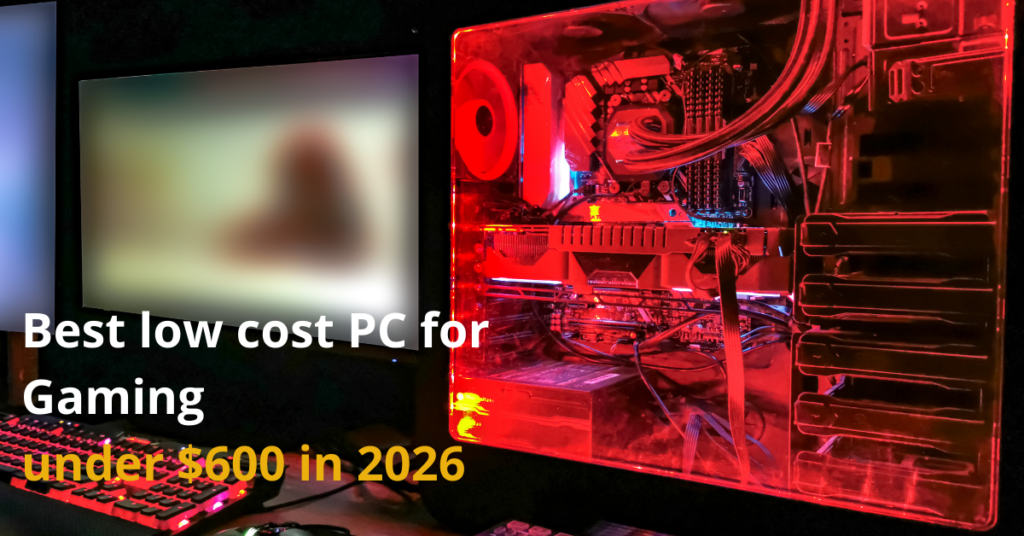
Six hundred dollars still buys a gaming PC that can run real games. Not on max settings, not at 4K, but a genuine gaming experience at 1080p that doesn’t feel like a compromise every time you boot up. The honest truth is that a low cost pc for gaming in 2026 is harder to find than it was two or three years ago because RAM and SSD prices spiked in late 2025 and haven’t come down meaningfully since. What used to be a $450 problem now costs $600, and anything claiming to game for less is usually cutting corners somewhere you’ll feel immediately.
The good news is that the $600 bracket still works if you know the three paths available to you and pick the right one for your situation. From my experience shopping this segment, most people default to searching “gaming PC under $600” on Amazon and end up with a refurbished office tower with a stuck-in GPU, which is actually fine if you verify the right things before buying. I’ll walk through all of it.

Before jumping into the list, one thing worth anchoring to: the Steam Hardware Survey for January 2026 shows that 1080p is still the primary resolution for 52.59% of all gaming PCs. That means a low cost pc for gaming built around 1080p isn’t settling. It’s exactly what the majority of PC gamers are running. You’re not buying a second-class experience. You’re buying the most common gaming experience on PC, which happens to cost less.
The 10 Best Low Cost PC for Gaming Options Under $600
This is the one to buy if you can find it at this price. An RTX 5050 paired with a current-gen Core i5 on a standard motherboard with a 650W 80+ Gold PSU is a genuinely modern platform. The 16GB DDR5 ships as a single stick, so dropping a second one in later unlocks dual-channel performance without rebuilding anything. From my experience with prebuilts at this price, the PSU and motherboard are usually where brands cut corners. MSI doesn’t here. It also comes with Wi-Fi 6E and a 1TB PCIe 4.0 SSD. It’s the closest thing to a complete answer for “best gaming pc under 600” right now.
Pairs a Core i5 6th gen with a GTX 1660 Super and 16GB of RAM on a clean 1TB SSD. The GTX 1660 Super still handles 1080p surprisingly well in esports and older AAA games. Most players I know running this GPU at 1080p are not struggling. The main thing to verify before buying any refurb HP tower is PSU quality and whether the CPU generation passes Windows 11’s official requirements. The 6th gen Intel processors are technically outside Microsoft’s supported list, even when the listing shows Windows 11 Pro installed.
The slightly cheaper sibling with 512GB of SSD storage instead of 1TB. Functionally the same machine and the same GPU. If you have an old HDD sitting around you can add it for bulk storage, which makes the 512GB feel less tight. I usually suggest the 1TB version at $35 more if storage is a concern, but the $450 option is the right call if your game library is small or you’re buying your first gaming PC and haven’t accumulated a 500GB collection yet.
The most RAM you’ll find in a sub-$600 refurb. 32GB is genuinely meaningful in 2026 when modern games plus Discord plus a browser eat through 16GB faster than people expect. The GPU is still a GTX 1660 Super on an older Core i5-6500, so gaming performance is the same as the HP options above. The extra RAM is the differentiator. If you multitask while gaming or keep a lot running in the background, this is worth the premium over the cheaper Dell options.
Same Dell body as above with 16GB RAM and a 1TB SSD. The OptiPlex heritage means you’re getting a dense business tower that wasn’t designed for a GPU in the first place, so check airflow and GPU clearance before buying. It works fine in practice but it’s not the roomiest case for the GPU. The recognizable Dell brand and the GTX 1660 Super make this a safe 1080p option if you’re cautious about buying unknown brands.
The cheapest Dell option on the list. Gaming performance is identical to the others in this GPU tier. The 512GB SSD gets full quickly with modern games regularly exceeding 100GB per install, so plan on adding a cheap HDD or external drive soon. But as a pure entry point for 1080p esports gaming, this gets you into the GTX 1660 Super tier for under $440, which is genuinely hard to beat as a low cost pc for gaming in 2026.
Custom used builds vary widely but this configuration shows up consistently on US marketplaces. 16GB RAM, a GTX 1660 Super, and 500GB SSD plus a 3TB HDD means you’re set for storage. The Ryzen 5 platform is more upgrade-friendly than older Intel generations. The risk with custom used builds is part verification: always ask for the PSU brand and wattage because that’s the most commonly hidden weakness in used builds sold by private sellers.
The best value-per-dollar option on this entire list if you find it in good condition. A GTX 1660 Ti and an i5-10400F at $292 is remarkable. The 10th gen Intel CPU actually meets Windows 11’s official requirements, which is a significant advantage over the 6th gen refurb options. Only 16GB RAM and 512GB SSD, but at this price you have $300 left in your budget for upgrades or peripherals. I’ve noticed this model comes up frequently on Facebook Marketplace and eBay at this range.
The Ryzen 5 5600G is a legitimately good gaming CPU and this is one of the better chassis HP has made for actual airflow. The major issue: it ships with 8GB of RAM, which is tight in 2026. Budget another $35 to $50 for a second 8GB stick to hit dual-channel 16GB and the performance difference is noticeable. Beyond that upgrade, this is a solid machine for the price with real upgrade headroom on both RAM and storage. Also verify whether the PSU is proprietary before planning future GPU upgrades.
An i7-9700F is genuinely strong for gaming even in 2026, and the GTX 1660 Ti pairs well with it. The listing snapshots for this configuration typically show large RAM amounts with a smaller SSD plus an HDD. The CPU is the standout here: eight cores without the thermal overhead of hyper-threading makes it unusually consistent in CPU-intensive titles. As with all used custom builds, verify temperatures under load before trusting it for long sessions.
Comparing the GPU Tiers at This Price
Every option on this list uses either an RTX 5050 or a GTX 1660 Super/Ti variant. Understanding what that means in practice saves you from disappointment. The GTX 1660 Super and 1660 Ti are the same generation and handle 1080p gaming well in everything from Valorant and CS2 at 100 plus fps down to more demanding titles like Cyberpunk 2077 at medium settings at 60fps. They don’t do ray tracing and they can’t push 1440p comfortably. The RTX 5050 in the MSI Aegis is a significant step forward with DLSS 4 support and better performance headroom for newer titles.
| GPU | 1080p Esports FPS | 1080p AAA (High) | VRAM | Ray Tracing |
|---|---|---|---|---|
| RTX 5050 | 150-200+ | 55-70 fps | 8GB | Yes (light) |
| GTX 1660 Ti | 120-180 | 45-60 fps | 6GB | No |
| GTX 1660 Super | 100-160 | 40-55 fps | 6GB | No |
The gap between the 1660 Super and the RTX 5050 is real, but so is the price gap. If your game library is Valorant, Fortnite, and older titles, the refurb 1660 Super options are genuinely fine and will feel fast. If you play the latest AAA releases and want some longevity, the MSI Aegis at $599 is the only new option worth considering in a gaming pc under 600 budget right now.
The Windows 11 Problem No One Talks About
I’ve noticed that almost every refurb listing at this price shows “Windows 11 Pro” installed, and almost none of them mention that the CPU might not be on Microsoft’s officially supported hardware list. Sixth-generation Intel processors like the i5-6500 in several Dell and HP options above aren’t on that list. The system runs Windows 11 because the seller installed it anyway, but you may not receive security updates indefinitely and you could face forced upgrade issues later.
This is one of those details that separates a good deal from a headache six months later. If you’re just looking for something to game on for a year or two and don’t care about update support, the 6th gen refurbs are perfectly functional. If you want a machine you can use confidently for three to four years, pay attention to the CPU generation before clicking buy.
If you’re thinking about spending a bit more to get a proper current-gen build rather than going refurb, the entry-level gaming PC guide covers exactly what $700 to $800 buys you in 2026 and whether that extra spend is worth it over the options listed here. And if you’re curious about the full cost breakdown for building from scratch rather than buying prebuilt, the complete gaming PC cost guide for 2026 walks through every component with real price ranges so you can compare both paths side by side.
What to Check Before Buying Any Used or Refurb Option
| Check This | Why It Matters | How to Verify |
|---|---|---|
| GPU model and VRAM | Marketing names lie. “GTX 1660” without “Super” or “Ti” is a different, weaker card | Ask for GPU-Z screenshot or run it yourself at pickup |
| PSU brand and wattage | Cheap PSUs cause crashes under gaming load and limit future GPU upgrades | Ask seller directly. Under 450W or unknown brand = red flag |
| CPU generation | Affects Windows 11 official support and future upgrade options | Check Intel or AMD’s Windows 11 supported CPU list |
| TPM 2.0 status | Required for Windows 11. May be present but disabled in BIOS | Run tpm.msc in Windows Run dialog after purchase |
| Return policy | Used PCs can have hidden thermals, drive issues, or GPU problems | Buy only from sellers offering at least 14-day returns |
A low cost pc for gaming is only a good deal if it actually works when you need it to. That checklist takes ten minutes and can save you a lot of frustration. The vast majority of problems I’ve seen with used gaming PCs come down to PSU quality and hidden thermals, both of which are easy to catch if you know to look.
The bottom line for a gaming pc under 600 in 2026: the MSI Aegis R2 at $599 is the clear winner if you find it at that price, the Dell G5 5000 at around $292 is the best value-per-dollar used option, and the refurb GTX 1660 Super towers fill the middle ground reliably for 1080p gaming. Pick based on which trade-offs you’re comfortable with. All of them play games.
Frequently asked questions
Can you get a good low cost PC for gaming under $600 in 2026?
Yes, but the options are narrower than they were two or three years ago. RAM and SSD pricing pressure has pushed “entry gaming” budgets upward, meaning most new prebuilts cluster above $600 unless there’s a real sale. Within the $600 cap, your best new option is the MSI Aegis R2 during a deal window at $599. For refurbished, the GTX 1660 Super tier reliably shows up between $430 and $556. Used options like the Dell G5 5000 can get you into GTX 1660 Ti territory for around $292 if you’re patient. All of these handle 1080p gaming, which is still the primary resolution for over half of all Steam users.
Is a GTX 1660 Super still good enough for gaming in 2026?
For 1080p it holds up better than most people expect. Esports titles like Valorant, CS2, and Fortnite run at well over 100fps at 1080p. Older AAA games run at 60fps at medium to high settings without struggling. Newer demanding titles like Cyberpunk 2077 or Alan Wake 2 require settings adjustments but remain playable. The 6GB VRAM is the card’s biggest limitation in 2026 since newer AAA games with heavy textures can push past it at high settings. For most gamers on a tight budget it’s still a legitimate 1080p card, just not a future-proof one.
What’s the risk of buying a refurbished gaming PC?
The two biggest risks are PSU quality and Windows 11 compatibility on older CPU generations. Many refurb “gaming towers” are converted office machines with cheap or unknown PSUs that hold up fine for office work but crash under gaming load. The second issue is that 6th gen Intel CPUs aren’t officially on Microsoft’s Windows 11 supported hardware list, so the system may run Windows 11 but without guaranteed long-term update support. Always verify the PSU brand and wattage, check the CPU generation against Microsoft’s official list, and buy only from sellers with a return window of at least 14 days.
Should I build a gaming PC or buy a prebuilt under $600?
In 2026, DIY at this price point is harder than it looks. RAM and SSD prices are unusually high, and even seasoned builders describe sub-$700 DIY as a constraint, not a bargain. Building your own makes more sense at the $800 to $1,200 range where the savings and customization options justify the effort. Under $600, a prebuilt deal like the MSI Aegis or a verified refurb often delivers better value than buying individual components at current pricing. The exception is if you already own some parts like RAM or a case, which can shift the math meaningfully in DIY’s favor.